
Why Nearshore Teams in LATAM?
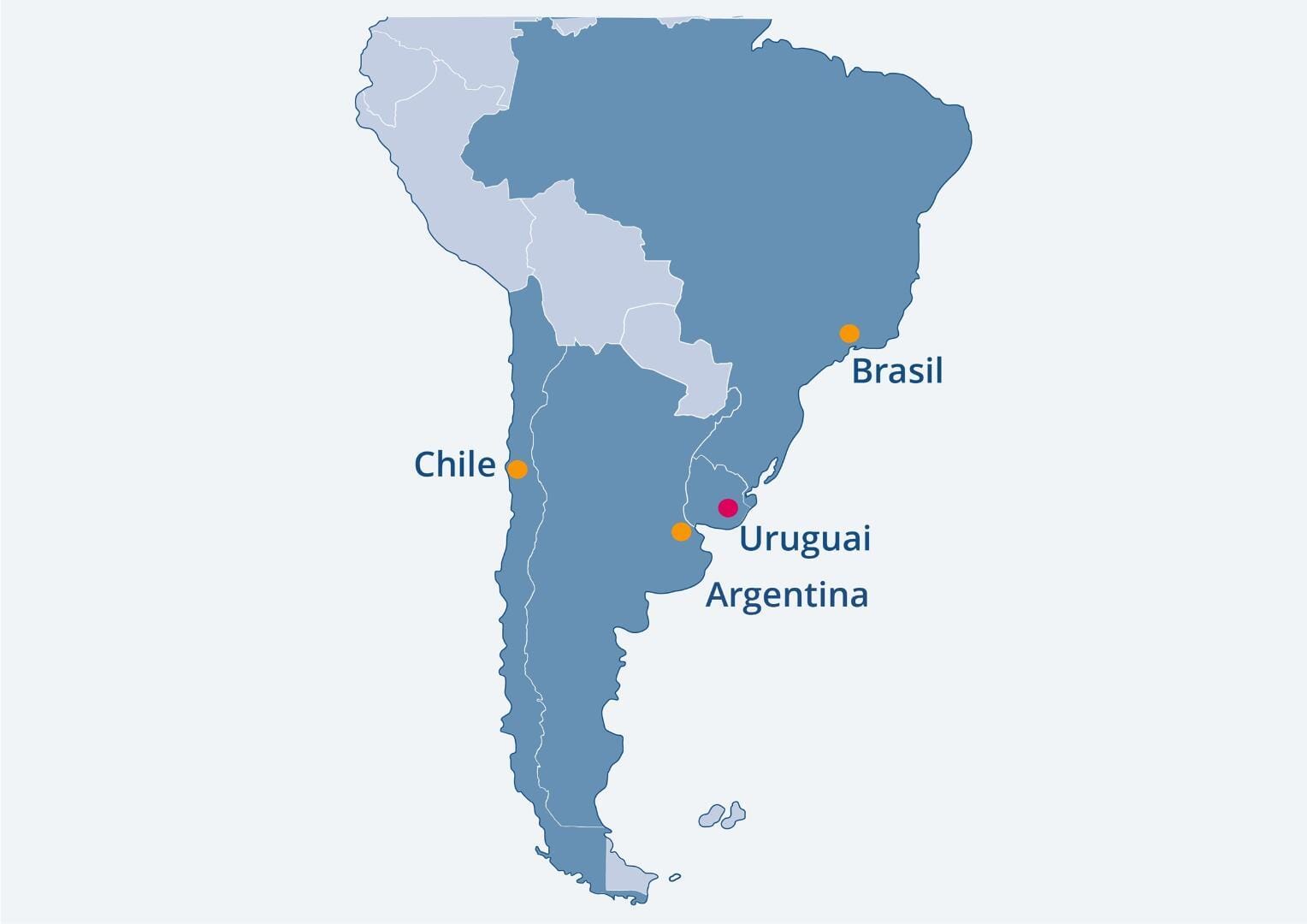
Hiring internationally is no longer just about cutting costs. It is about finding the right talent in the right market, close enough to work at the same pace as your business. Brazil, Argentina, Chile and Uruguay have become important nearshore markets in Latin America, each offering a different combination of talent, cost, infrastructure and business conditions.

Author: Wide LATAM
Sep 11, 2026 | 6 min read
Categories
What Makes LATAM a Strong Nearshore Market?
Nearshoring means building a team in a nearby country instead of a distant offshore location, which usually means overlapping business hours and easier day-to-day collaboration. A product manager in the United States can raise a requirement with a developer in Buenos Aires and get an answer the same day, instead of waiting until the next one.
Latin America offers professionals across technology, engineering, finance, operations and business services, often at a lower cost than hiring the same profiles in the US or Europe. Brazil is the most populous country in the region, and Argentina has a well-established software and engineering talent base. Chile has invested in digital infrastructure and connectivity and has positioned itself as a hub for global services, with more than 60 international companies using the country as a base to export services, according to InvestChile.

Uruguay, a smaller market, has built a solid technology and services sector. According to Uruguay XXI, the country’s investment and export promotion agency, Uruguay has developed a strong technology and services ecosystem, with capabilities across IT, business services, R&D and innovation.
Time zone overlap is one of the more practical advantages. Argentina and Uruguay operate on UTC-3, and Chile runs close behind depending on the season, which lets teams collaborate in real time rather than across a full working-day gap. Total employment cost, once benefits, compliance and onboarding are factored in, also tends to compare favorably with hiring the same roles in the US, and cultural and business alignment helps teams integrate faster once they are in place.


Brazil, Argentina, Chile or Uruguay? Choosing the Right Market
There is no single best market for every company. The right choice depends on the roles you need, your budget, your time zone requirements and your expansion plans.
Brazil
The largest talent market in Latin America, with professionals across technology, engineering, finance, operations and business services. Its scale makes it a good fit for companies that need to build larger teams or reach specialized profiles that are harder to find in smaller markets. At the same time, Brazil’s labor legislation and administrative processes are detailed and specific, which is why most international companies hiring here work with a local partner who already knows how to navigate them.
Argentina
A well-established base of technology and engineering talent, with depth across software development, data, product and IT roles, and a time zone that works well for teams collaborating with North America.
Chile
A market that combines talent with solid infrastructure and a mature business environment, particularly relevant for technology, digital services, data, cybersecurity and regional operations.
Uruguay
A smaller, well-connected market, suited to technology talent, business services, regional headquarters and R&D functions.
Nearshore vs. Offshore: What’s the Difference?
The difference mostly comes down to working hours. If an offshore team is several time zones away, a question raised in the afternoon often waits until the next day. With a nearshore team in Latin America, that same question can usually be resolved before the day ends. For teams that rely on frequent back-and-forth, across development cycles, approvals and support, that difference adds up over time.
Beyond Technology: Where Nearshore Teams Add Value
Software and engineering are the most common use cases, but nearshoring also supports finance, customer support, sales, marketing and shared services. That makes it relevant not only for startups, but for established companies building out international teams.
Why Local Expertise Matters
Hiring in Latin America is not simply a matter of finding qualified candidates. Once a company decides to hire, it also needs to understand how employment works in the country where that person will be based. Employment contracts, payroll, benefits, taxes and social security, working hours, vacation and public holidays, termination and other compliance requirements vary from one market to another.
This becomes particularly important for companies entering a new market for the first time. A hiring model that works in one country may not work in another, and getting local requirements wrong can lead to unnecessary costs, delays and compliance risks.
A local partner can help companies navigate this process from the start. That includes identifying the right market for the roles they need, recruiting and screening candidates, setting up compliant employment, managing payroll and benefits, and keeping up with local requirements as the team grows.
The value is not only in making hiring easier. It is in giving companies access to local talent and market knowledge without having to build expertise in the employment systems of every country where they operate.

Final thoughts
Nearshoring is not simply about choosing a country with access to talent. It is about finding the right market for your business and having the local expertise to turn that decision into a successful team.
Brazil, Argentina, Chile and Uruguay each offer different advantages, and the right choice depends on the roles, scale and goals of each company. But wherever a company decides to hire, understanding the local employment environment is essential to building and growing a team successfully.
Wide LATAM helps international companies navigate that process across Brazil, Argentina, Chile and Uruguay from choosing the right market and recruiting talent to managing local employment, payroll, benefits and compliance. With one partner across the region, companies can focus on building their teams while relying on local expertise to manage the complexities of hiring in each market.

OUR SERVICES